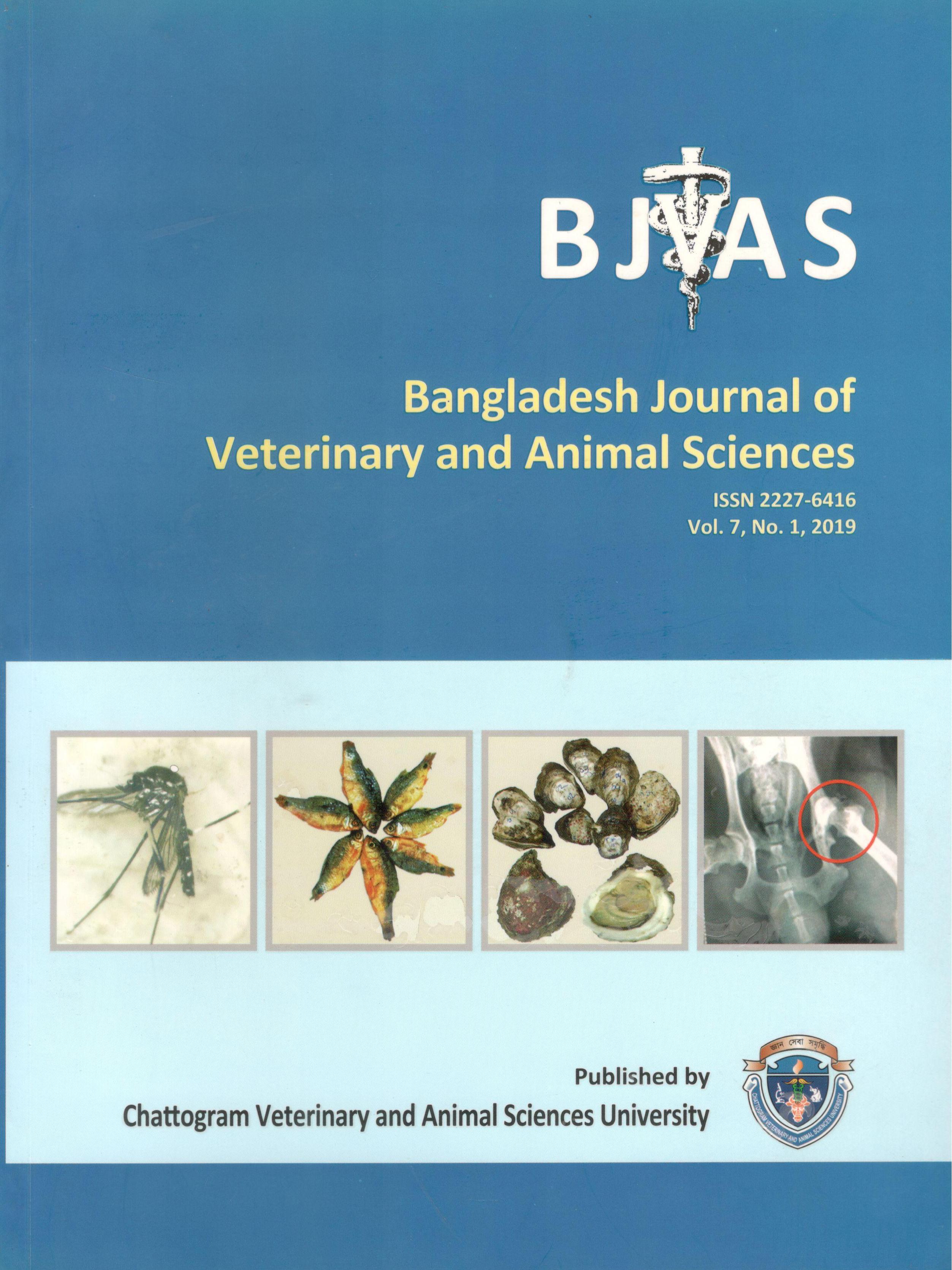
Nutritional attributes of oyster crassostrea madrasensis collected from the coastal regions of Bangladesh
DOI:
https://doi.org/10.60015/Keywords:
Oyster, Essential Amino Acid, Essential Fatty Acid, Proximate analysisAbstract
Oysters are power-packed with the essential vitamins, important minerals and Omega-3 fatty acids along with the most essential amino acids; thus, considered as superfoods all around the world in both culinary and nutrition industries. In the coastal regions of Bangladesh, production of the oyster is somehow evident, yet under-studied and not fully utilized. This study deals with the nutritional attributes of oysters (Crassostrea madrasensis) in the Maheskhali Channel of Cox's Bazar and has been conducted throughout the 12-month period spanning from March 2018 to February 2019. After analyzing the proximate composition, the result indicated that protein content varies from 40.4% to 67.1%, while lipid varies from 6.8% to 13.8% depending on the season. Among essential amino acids, lysine (5.23% protein) content was the highest followed by aspartic acid (3.9% protein), threonine (2.69% protein); and histidine (1.90% protein). The lipid content of oysters consists of the higher amount of polyunsaturated fatty acids (PUFA) with a significant amount of Eicosapentaenoic acid (EPA), Docosahexaenoic acid (DHA) and linoleic acid. Both the amino acid and fatty acid contents were found to vary significantly with the seasonal variation. Regardless of the eco-physiological distinction, the nutritional quality of oyster meat was tremendously good, especially before gamete release. This study is dedicated to recognizing the necessity of introducing oyster into the culinary industry of our country as a better protein substitute instead of the red meats with high cholesterols.
Downloads
Downloads
Published
Issue
Section
License
Copyright (c) 2025 BJVAS

This work is licensed under a Creative Commons Attribution-NonCommercial-NoDerivatives 4.0 International License.